
Semicon Japan 2025
plus METI's first-ever, very timely Global Economic Security Forum

This post has portions reserved for premium subscribers. Also, Substack says this is too long for email - make sure to pull down the whole email, or better yet, download the app!
Friends, happy holidays! This post has been long in the (holiday) baking.
Very nice to hear from some of you after my last post, on Netflix, and how they would be better home for Warner Bros than a lot of alternatives, from hyperscalers to Paramount. Haven’t read it? Here it is.
Meanwhile, the story continues: Dec 8: Paramount revised its offer —> Dec 17: Warner Discovery has advised its shareholders to decline —> Dec 22: Paramount has submitted an unsolicited, again-revised offer.
With final projects done in Opportunity Recognition (MBA, remote-first version), and then in Strategy for the Networked Economy (undergrad, in-person version)….I could have (and probably should have) paused to catch a breath. This year has packed a lot.

But instead, I got on a plane to Japan. 🛬
This was my third trip for a project assessing Japan’s reinvestment in its semiconductor industry.
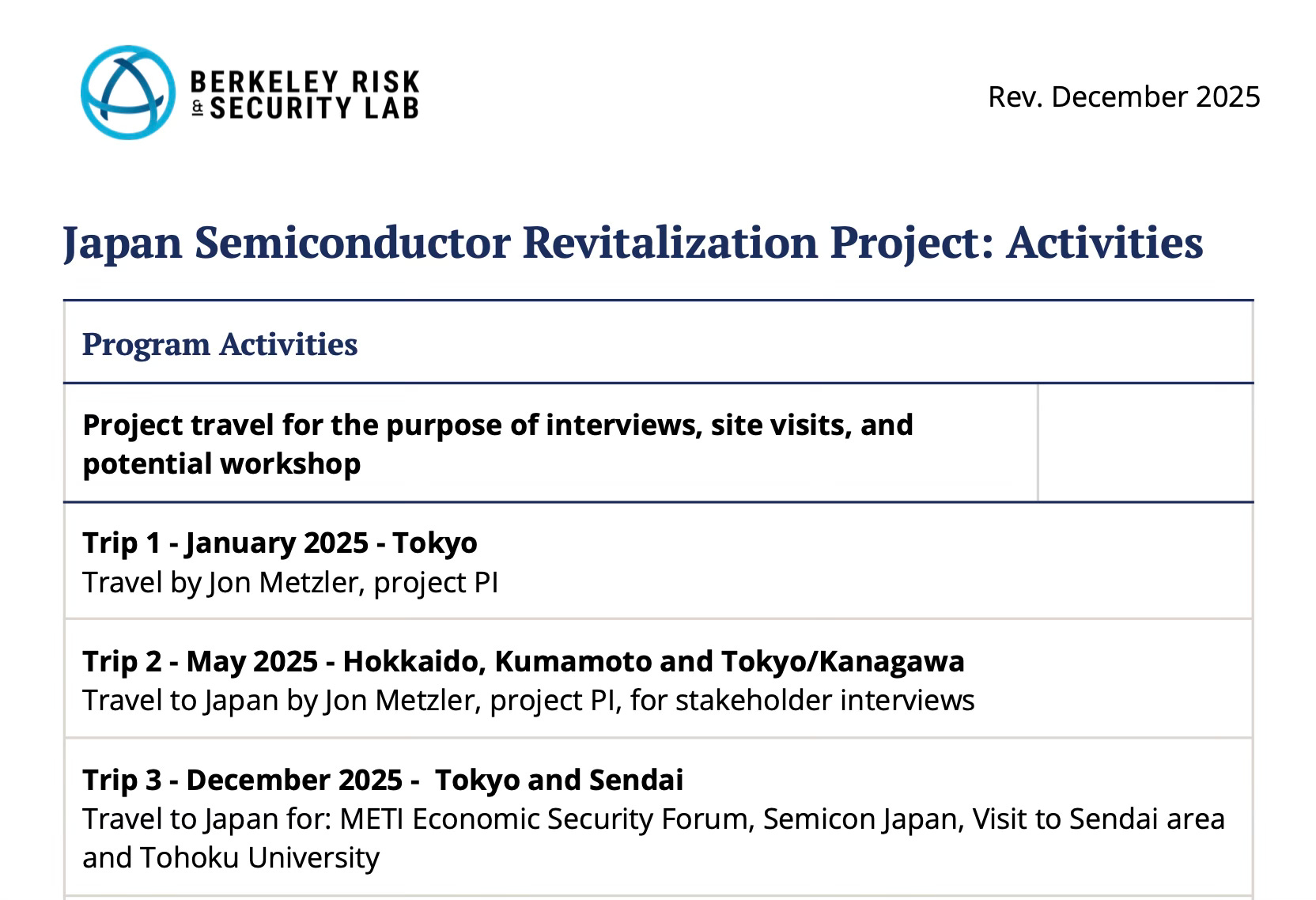
The trip had three anchors:
Japan’s METI convened its first Tokyo Economic Security Forum. This by itself was an excellent event; it also came at the end of months of economic security-related programming, culminating in a panel discussion at Semicon Japan.
a visit to Sendai, Miyagi Prefecture, for meetings with Tohoku University, JETRO’s Sendai office, and Miyagi Prefecture about the local semiconductor ecosystem and semiconductor-related research and activity at Tohoku University
Semicon Japan, for interviews scheduled and spontaneous, and the last event in METI’s economic security programming sequence
For more background on my project assessing Japan’s reinvestment in its semiconductor industry, please see the post below (which also covers travel to Kumamoto, Kyushu, and Sapporo and Chitose in Hokkaido).
Many thanks for the UC-Berkeley Center for Japanese Studies, Berkeley Risk & Security Lab, and the Institute for Business Innovation at Haas for their support enabling the trip and this project. 🙏
On to our trip.
METI Global Economic Security Forum
On December 15, Japan’s METI (Ministry of Economy, Trade and Industry; the former MITI) convened its first Tokyo Economic Security Forum. This by itself was an excellent event; it also came at the end of quite literally months of economic security-related programming, culminating in a panel discussion at Semicon Japan.
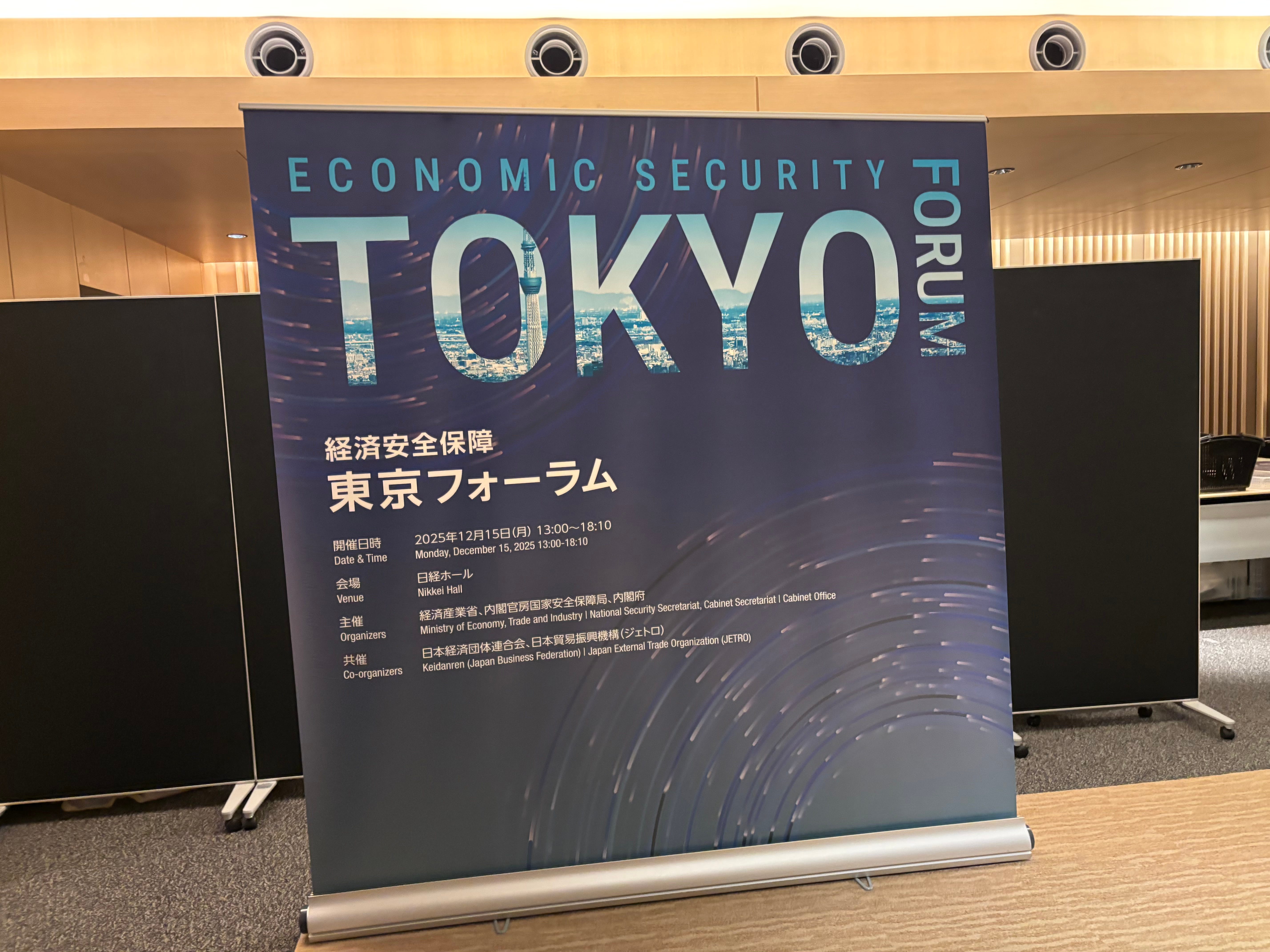
At the headline event on December 15, seeing JOGMEC (Japan Organization for Metals and Energy Security) juxtaposed with General Motors juxtaposed with Finland’s NESA (National Emergency Supply Agency) juxtaposed with France’s Carester drove home the intended message:
that economic security is a global issue;
response is taking different forms at the nation-state and alliance level;
that response will require public-private collaboration
companies at the top of supply chains are forging direct relationships with companies at lower layers in supply chains, such as resource suppliers and recyclers
Japan, while seeking both strategic autonomy and strategic indispensability, is seeking to play a convening role.
Why Japan, as convening force?
Japan’s resource dependency, of course, is historically known. Securing continuity of access to resources has been a consistent priority. Its experience in 2010, when China withheld exports of rare earth minerals was a catalyzing moment. (For more on details on that incident and the Senkakus, see this 2013 Naval War College Review.)
We are now 15 years on that incident. The US has had similar catalyzing moments this year related to rare earth imports. Some may have noticed the Pax Silica preamble announcement on December 11.
Further noteworthy takeaways from METI’s Global Economic Security Forum:
hearing representatives of the Keidanren, long the voice of Japan’s traditional industry, talk about the clear relationship between economic security and national security;
hearing various speakers (and not just METI) attempt to reframe economic security not as a potential cost, but rather as an opportunity;
All speakers in policy roles noted that while policymakers can convene, signal, and attempt to induce behaviors, ultimately companies are the one building products and making supply chain decisions; hence the emphasis on public-private partnerships
Congratulations to our hosts on a successful event, and thanks again for the invitation.
On to Semicon Japan.
Before that though: I missed Semicon West this year (though, I got to see and hear a bit of the event, thanks to a student who dialed into Opportunity Recognition class from the event. IYKYK). I’ve been eager to get to the Phoenix area, mainly to see the sheer breadth of construction. If you could pick up only one metro area in the United States as the winner of our post-covid domestic relocation and investments, via the CHIPS Act and more, I would put forward Greater Phoenix (aka the Silicon Desert) as a candidate, with all respect to Albany and Greater Columbus (and, though not directly CHIPS-driven, some of the giga-scale data center host cities; for that topic, I’ll refer you to this September SemiAnalysis post).
Back to Semicon Japan. Cumulative (not unique) attendance for Semicon Japan, held at Tokyo Big Sight in Ariake in Tokyo Bay, was estimated 121,267, up from 103,165 the previous year, and that, according to various companies I spoke with, that was up from 2023. It didn’t feel this crowded (except for the very notable exception of meal and coffee queues; seemingly all were tended by one valiant but nonetheless solo cashier), perhaps because (1) Big Sight itself is sprawling; and (2) the event content was distributed across multiple halls, horizontally and vertically. This necessitated being mindful of time and distance when scheduling exhibitor visits, something CES regulars will be familiar with.
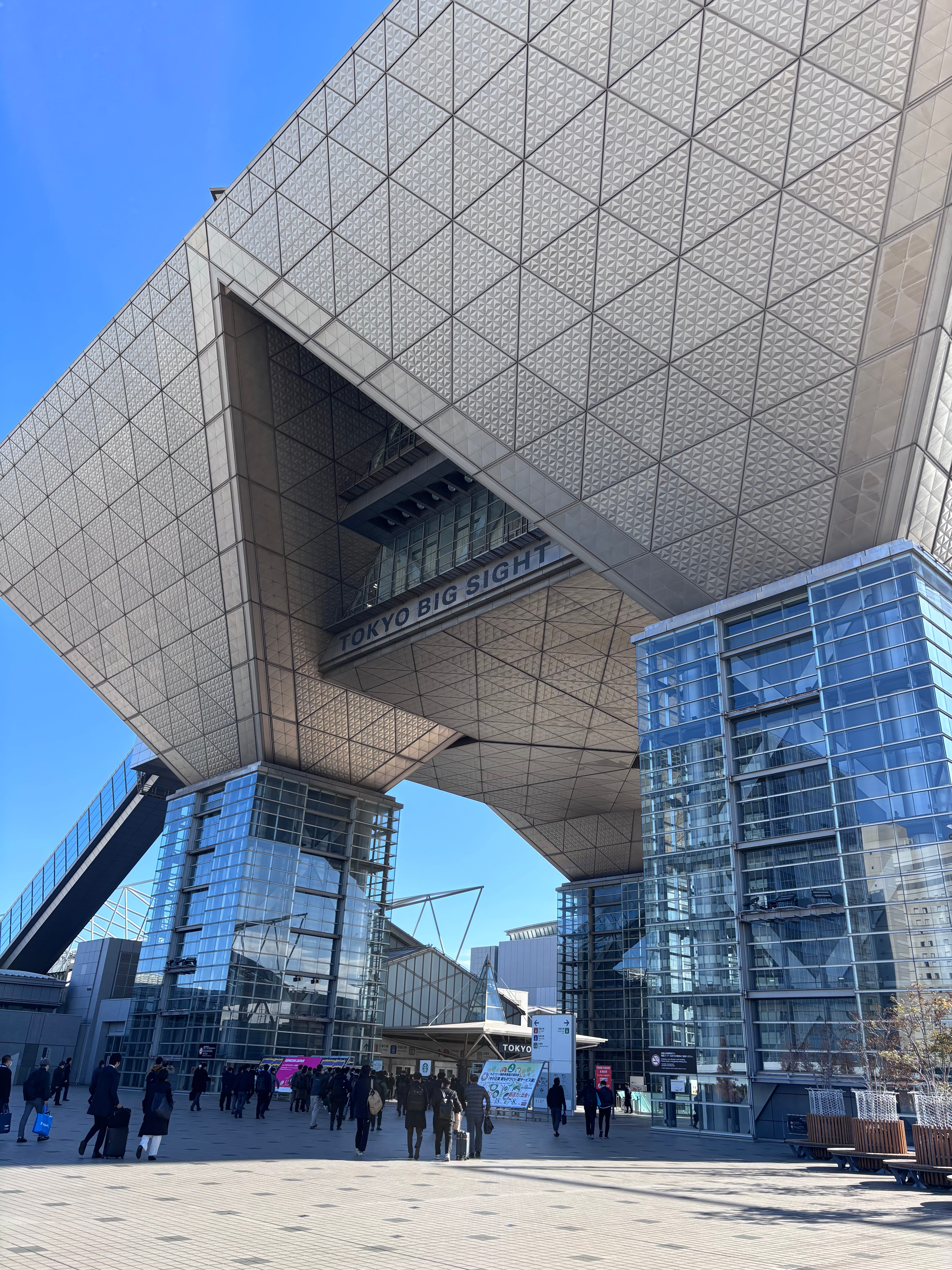
While not a semiconductor topic: notable in the evenings were old-timey taxi and bus queues! Something you don’t see as much of Stateside in the post-sharing era. But then again, Uber and alternatives are far less prevalent in Japan. (Funny aside: I did see author/historian Chris Miller, at Semicon Japan as speaker, avoid the cab line and wait elsewhere for an Uber; after checking arrival time estimates on Uber, I walked across the street and hailed a cab in the time-honored 1990s manner.)
Semicon Japan is really a B2B event. If you’re looking for a transport system, or robotic arm, or wafer cutter, this is your event.


Conversely, it is not much of a consumer event. That said, CES is just around the corner in January, and NVIDIA GTC looms in March. SPIE is also in January. IEDM was in December in San Francisco; NeurIPS (can we call it the new nerd prom?) was in San Diego.
From the US, as expected, IBM and Micron both had significant presence.
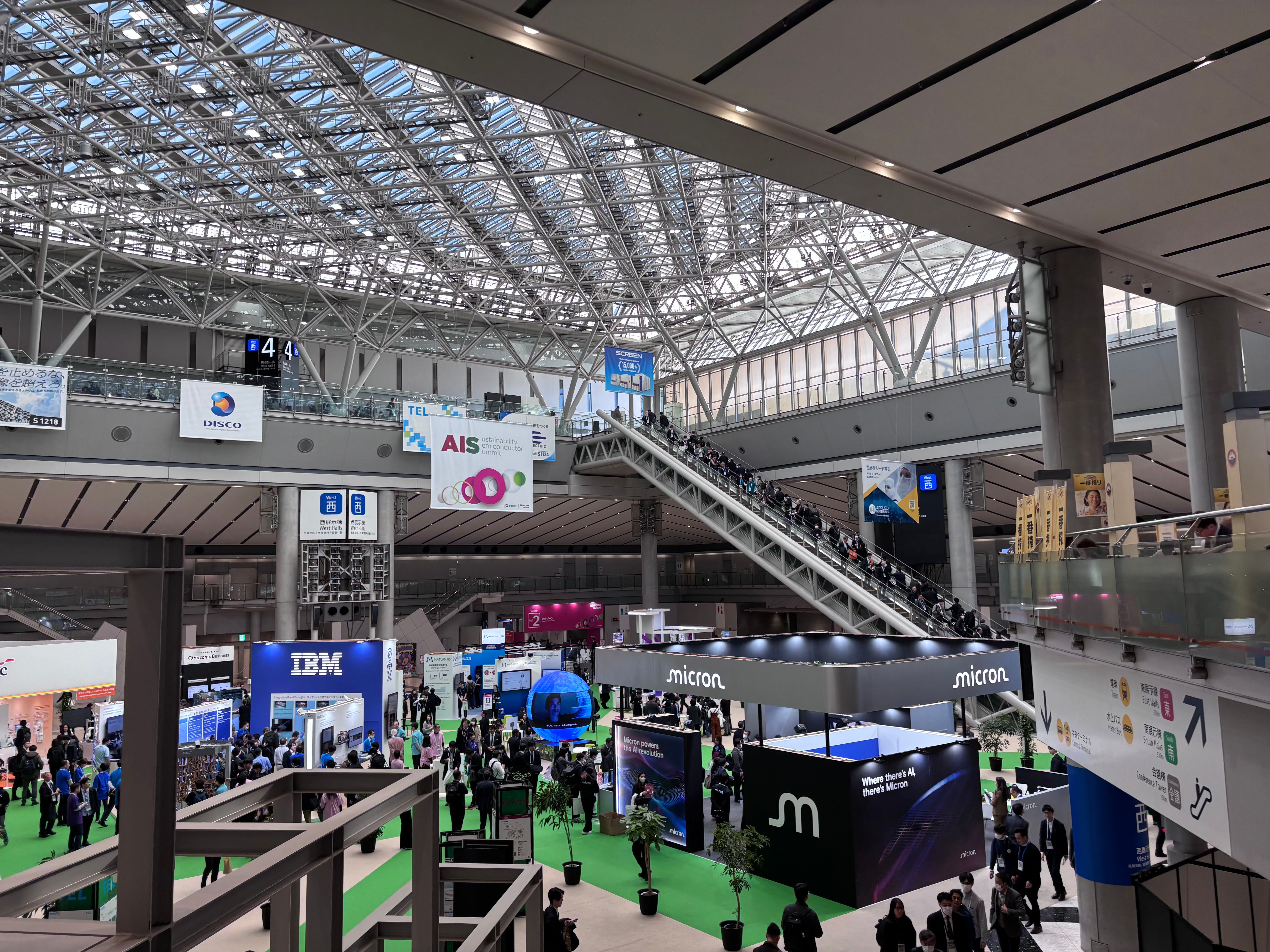
Micron (which long ago acquired the assets of Elpida Memory) has received multiple rounds of subsidies for DRAM manufacture in Hiroshima. In December, Nikkei Asia reported Micron would build HBM at its Hiroshima site, again with subsidies from the government of Japan.
IBM licensed 2nm GAA logic tech to startup Japanese foundry Rapidus in 2022, which Rapidus is now productizing. The two companies have had a close relationship since, extending beyond 2nm to more advanced logic nodes.
Former METI Minister Amari Akira, who helped push through Japan’s Economic Security and Promotion Act in 2022 as a member of the Diet, visited the IBM booth for what sure looks like a GAA walkthrough. IBM Semiconductor GM Mukesh Khare, pictured below, also spoke at METI’s Global Economic Security Forum, on the IBM-Rapidus collaboration.
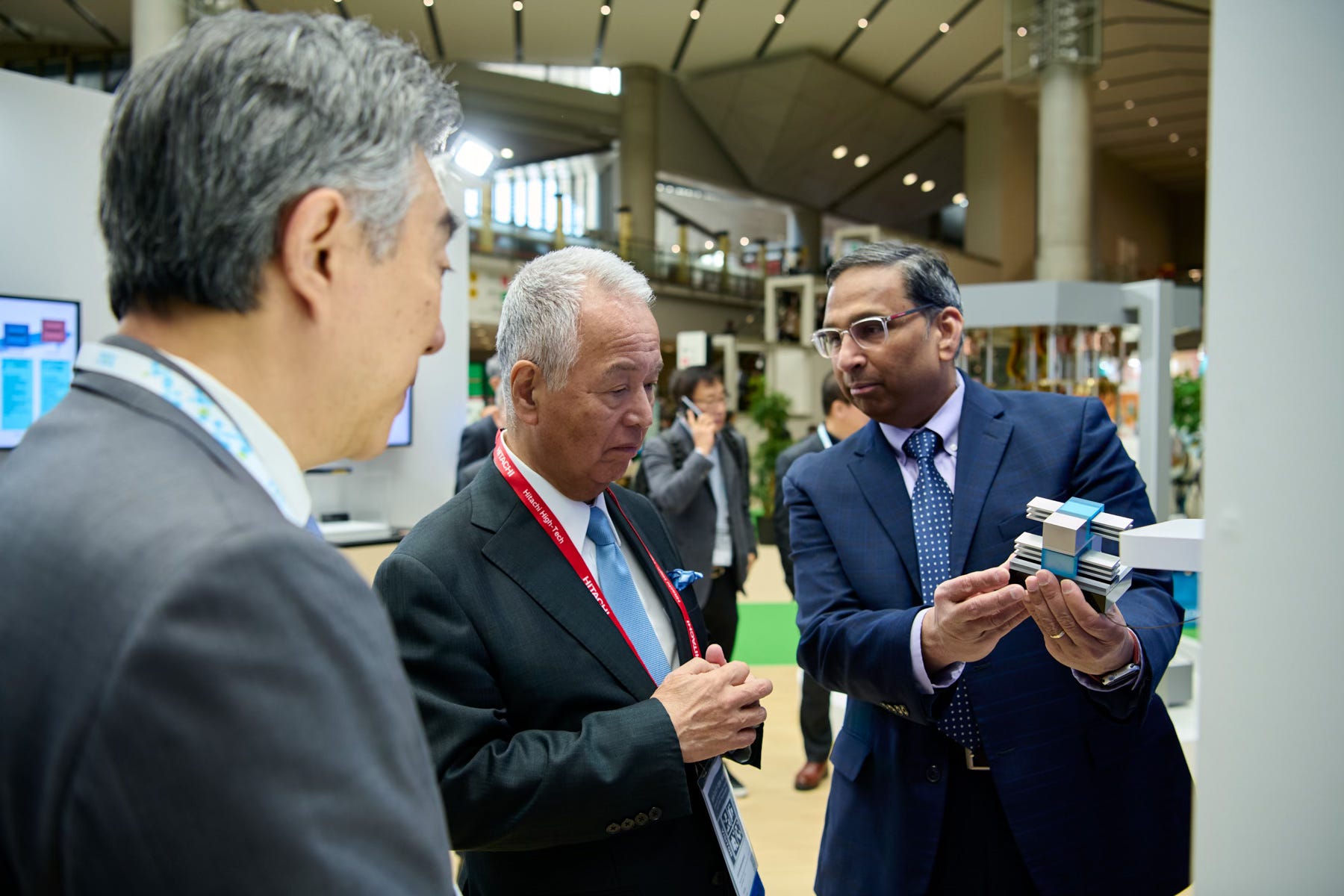
(A question I have asked a few people in recent months: with Rep Amari no longer in the Diet, who is stepping in to fill his economic security shoes? The answer, pretty consistently, has been Rep. Kobayashi from the LDP.)
I attended Semicon Japan with three main goals:
Catch-up meeting with local new foundry Rapidus
Meetings with two local fabless chip companies: EdgeCortix, and Preferred Networks
Fireside discussion on Economic Security & Geopolitical Dynamics Surrounding Semiconductors, featuring METI’s Nishikawa Kazumi, and representatives of the US and EU (respectively, author Chris Miller and Joris Teer of the European Union Institute for Strategic Studies
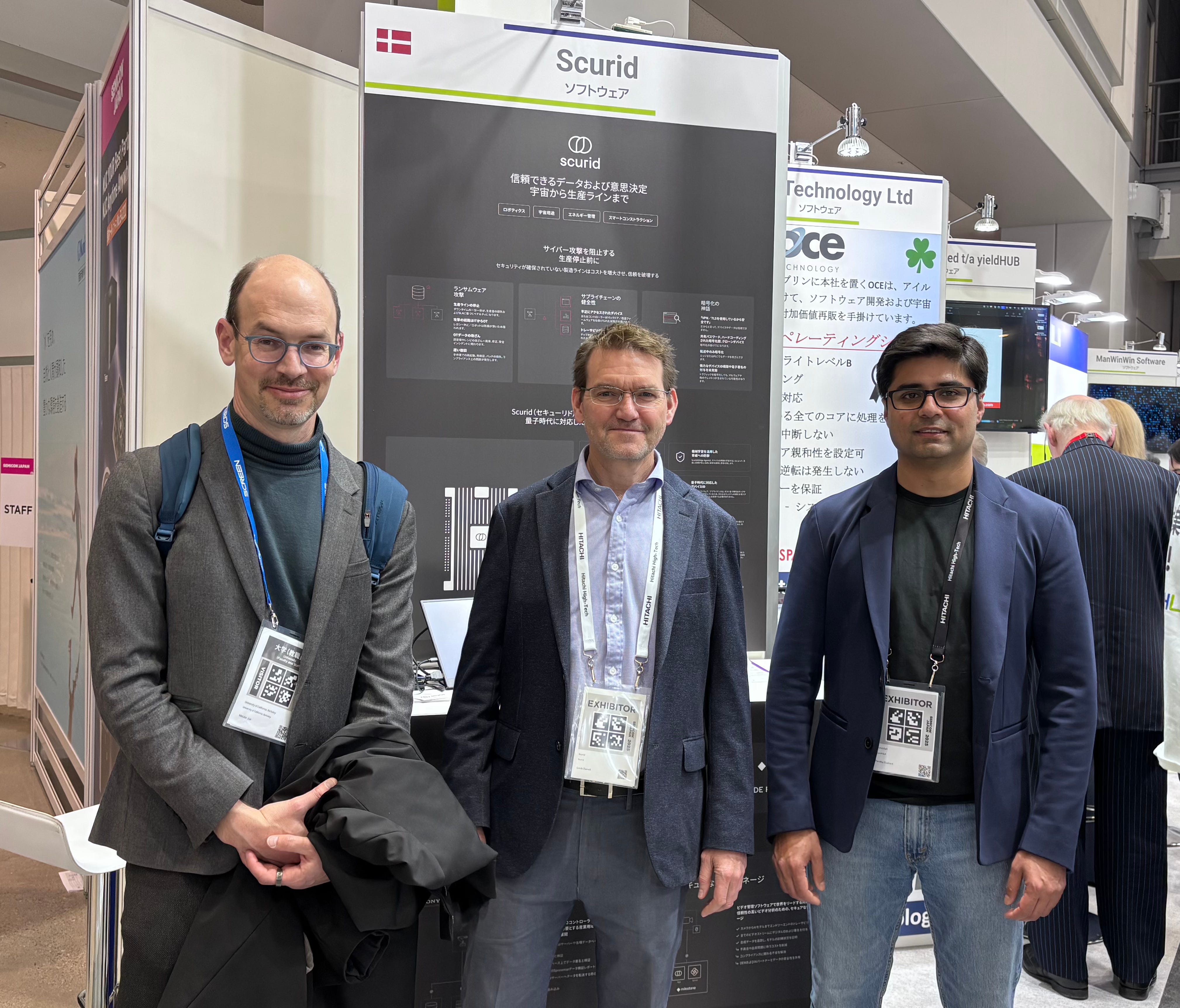
While there, it was also great to catch up with Scurid, which came through the Berkeley SkyDeck program (with support from JETRO), and which is collocated in Japan and the EU. Scurid provides data validation services to IoT systems. It was great to catch up with co-founders Sushant and Darrell. The company was exhibiting at Semicon Japan in the EU booth.
One oft-made critique of semis in Japan - there is not much of a fabless logic sector. This has been shared with me across many, many interviews - there’s no AMD, or NVIDIA, no Qualcomm, no Marvell, no Apple (Apple? yes, Apple, designer of Apple Silicon, e.g. the M1 through M5, A16, A17 etc ). Conversely, Japan has various industrial players (makers of MCUs or power semiconductors), e.g. Renesas, DENSO, ROHM and so on, and of course, Kioxia and Micron in memory.
So here, I’d like to introduce two exceptions to that valid critique, with very different go-to-market strategies.
EdgeCortix: headquartered in Japan (and fabricated in Taiwan), EdgeCortix provides the Sakura-II, the “world’s most flexible and energy efficient AI accelerator”. I first met the company in summer 2024, when they exhibited at the Japan-US Innovation Awards held each summer at Stanford. Since then, they have announced their second product (the Sakura II). In May 2025, the US Defense Innovation Unit announced EdgeCortix was one of several Hybrid Space Communications Network contract recipients (and the first-ever Japan headquartered company, per EdgeCortix’s release). Suffice it to say this got my attention!
Thanks to CEO Sakyasingha Dasgupta for scheduling time for visiting Berkeley faculty at the company’s booth at Semicon Japan. It was great to catch up, and discuss:
EdgeCortix’s value-add in bandwidth-constrained, power-constrained environments (such as assets that fly), in particular, relative to more resource-intensive alternatives.
AI-RAN:
Digits to Dollars and others have observed NVIDIA’s recent focus on AI-RAN and the network operator market (yes, I have a post in-progress). NVIDIA’s go-to-market focuses on the DU (distributed unit) in a 5G network (BBU in 4G networks). For power, cost, and general operating environment reasons, I have been…mildly surprised by this. Another way to say this - the DU market does have some price and operating constraints, and power consumption and real estate costs affect carrier opex.
And thus, a more resource-efficient edge accelerator company like EdgeCortix could be a more intuitive fit for this market. This comes with the necessary requisite caveats: that the RAN market is concentrated with high barriers to entry (as I wrote about at some length earlier this year in a paper on Open RAN; see below), so go-to-market will require skillful partnering with network operators and their RAN suppliers.
Preferred Networks: I first met Preferred Networks in 2016 and 2017, both at the Japan-US Innovation Awards. At the time, PFN was a deep learning company focused on solving tough object detection challenges in robotics. Since then, PFN has developed two generations of its MN-Core processor (respectively, on 12 nm and 7nm process nodes) for machine learning and high-performance computing applications. The company also stood up a cloud unit, Matlantis, to help customers run simulations, such as of new material behaviors. Atlantis customers include various industrial companies such as Daikin, AGC, Hyundai and Volkswagen. It was great to catch up with the company.
But wait, there’s more! What’s behind the fold:
Memory industry gossip
Catching up with Rapidus: a discussion of foundry positioning, and how Rapidus lower the cost barriers to custom silicon
Onward and upward! Thanks for reading, and thanks for reading in 2025!
Jon
